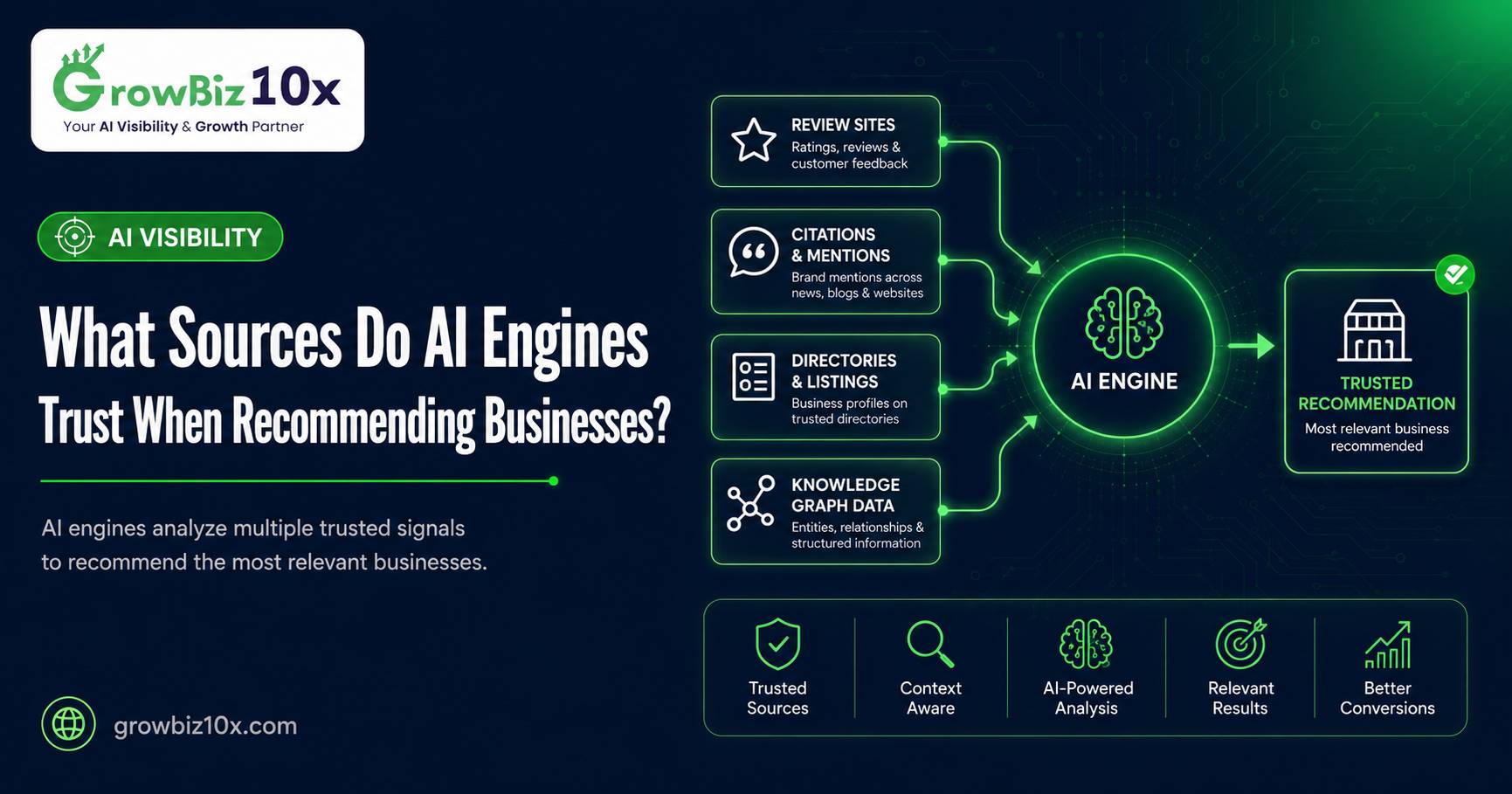
AI engines trust sources that combine independent verification with consistent structure: established review platforms, reputable directories, news and trade media, reference sites like Wikipedia, and active communities where real customers talk. Your own website supplies the facts, but third-party sources decide whether those facts are believed. When ChatGPT, Perplexity, or Google AI Overviews recommends a business, it is usually reflecting what these trusted sources collectively say, not what any single company says about itself.
Why Source Trust Matters More Than Rankings
Retrieval-based engines do not read the whole web for every answer. They search, then select a small set of pages to ground the response. That selection step is where trust operates. Pages from sources with editorial standards, a track record of accuracy, and clear structure get chosen; thin or purely promotional pages get skipped. If your business only appears on pages the engine never selects, you are invisible at answer time no matter how good your traditional SEO looks.
Review Platforms: Independent Evidence at Scale
Review sites are trusted because they aggregate many independent voices and are difficult for one business to fabricate at scale. Google Business Profile reviews matter for local questions, while industry platforms carry weight in their niches: software buyers see G2 and Capterra, travelers see TripAdvisor, home services see Yelp and Angi, and professional services see Clutch or their industry equivalents. Engines read both the ratings and the review text itself, so detailed reviews that mention specific services give models concrete language to associate with your business. The broader dynamics are covered in The Role of Reviews and Reputation in AI Recommendations.
Reference Sites, Directories, and Data Aggregators
Wikipedia and Wikidata anchor entity knowledge for most AI systems, which is why notable companies benefit so much from accurate articles. Below that tier, well-maintained directories and data aggregators corroborate your basic facts: name, category, location, hours, and services. Chambers of commerce, industry associations, and established vertical directories all count. The goal is agreement: when many structured sources state the same facts, engines treat those facts as reliable. For a closer look at reference sites and listings, read Do Directories and Wikipedia Still Matter for AI Visibility?.
Editorial Media and Best-Of Lists
Articles from newspapers, trade publications, and credible blogs are heavily represented in both training data and retrieved sources. Best-of lists and comparison articles are especially influential because they directly answer recommendation questions in the format engines want. A mention in a well-known roundup for your category often does more for AI visibility than months of on-site content, because that roundup is the page the engine actually cites. We explain this mechanism in How Citations and Brand Mentions Shape AI Answers.
Community Discussions: The Unpolished Signal
Engines increasingly weight forums such as Reddit and niche community sites because they contain candid, experience-based opinions. A thread where several people independently recommend your business is powerful corroboration. You cannot manufacture this, and trying usually backfires, but you can earn it by being genuinely helpful in communities, encouraging happy customers to share their experiences, and monitoring what is already being said about you.
A Quick Example: Mapping the Sources in One Market
Suppose you run a landscaping company and want to know which sources matter in your market. Ask Perplexity and Google AI Overviews the questions your customers ask: best landscaper near me, who should redesign a small backyard, whether professional lawn care is worth it. Record every source the engines cite. In a typical local market the list is short: Google Business Profile data, one or two review platforms, a local news roundup of recommended landscapers, and a community thread where homeowners compare notes. That short list is your source strategy. Claim and complete the profiles, build steady reviews on the cited platforms, pitch the roundup author for inclusion, and participate helpfully where homeowners already talk. You are not guessing at what engines trust; you are reading it directly off their citations.
Where Your Own Website Fits
- State your services, locations, and specialties in plain, quotable language
- Keep facts identical to what appears on your profiles and listings
- Add structured data so machines can parse your details without guessing
- Publish answer-shaped pages for the questions buyers actually ask
Frequently Asked Questions
Does the AI trust my website at all?
Yes, for facts about your own business: services, prices, locations, and policies. Engines routinely retrieve official sites to confirm details. What your site cannot do alone is establish that you are the best choice; that judgment comes from independent sources agreeing with you.
Which single source should I prioritize first?
For most local and SMB categories, a complete, active Google Business Profile plus steady reviews is the highest-leverage starting point, because it feeds both search and AI answers. After that, pursue your industry's dominant review platform and the best-of lists in your category.
Do social media profiles influence AI recommendations?
They help mostly as corroboration. Consistent names, descriptions, and links across LinkedIn, Facebook, and other profiles reinforce your entity. Individual posts rarely surface in recommendations, but an active presence signals a real, operating business.
Related reading
- How AI Engines Decide Which Businesses to Recommend
- How Large Language Models Learn About Your Business
- Training Data vs Real-Time Retrieval: How AI Finds Business Information
- Third-Party Validation: Why AI Needs Others to Vouch for You
Build Trust Where the Engines Are Looking
AI engines recommend businesses that trusted sources vouch for. Map the review platforms, directories, publications, and communities that matter in your category, then build a presence on each one deliberately. GrowBiz10x identifies which sources AI engines are actually citing in your market and shows you exactly where your business is missing. Run your free AI visibility check at growbiz10x.com and start earning trust where it counts.
Want to see how your business performs across AI platforms?
Get a free AI visibility audit and personalized insights for your brand.
About the Author
GrowBiz10x Team
AEO SpecialistWe share actionable insights on AI visibility, content strategy, and digital growth to help businesses get discovered and grow faster.
Related Posts

Categories
- Commercial / Agency / GrowBiz10x20
- Industry-Specific10
- Measuring AI Visibility10
- Practical AEO/GEO10
- SEO vs AEO vs GEO10
- Brand Signals & Authority10
- How AI Understands & Recommends Businesses10
- The Search Shift10
- Pillar: AI Visibility10
Get the latest insights in your inbox.
Subscribe to our newsletter and never miss an update.