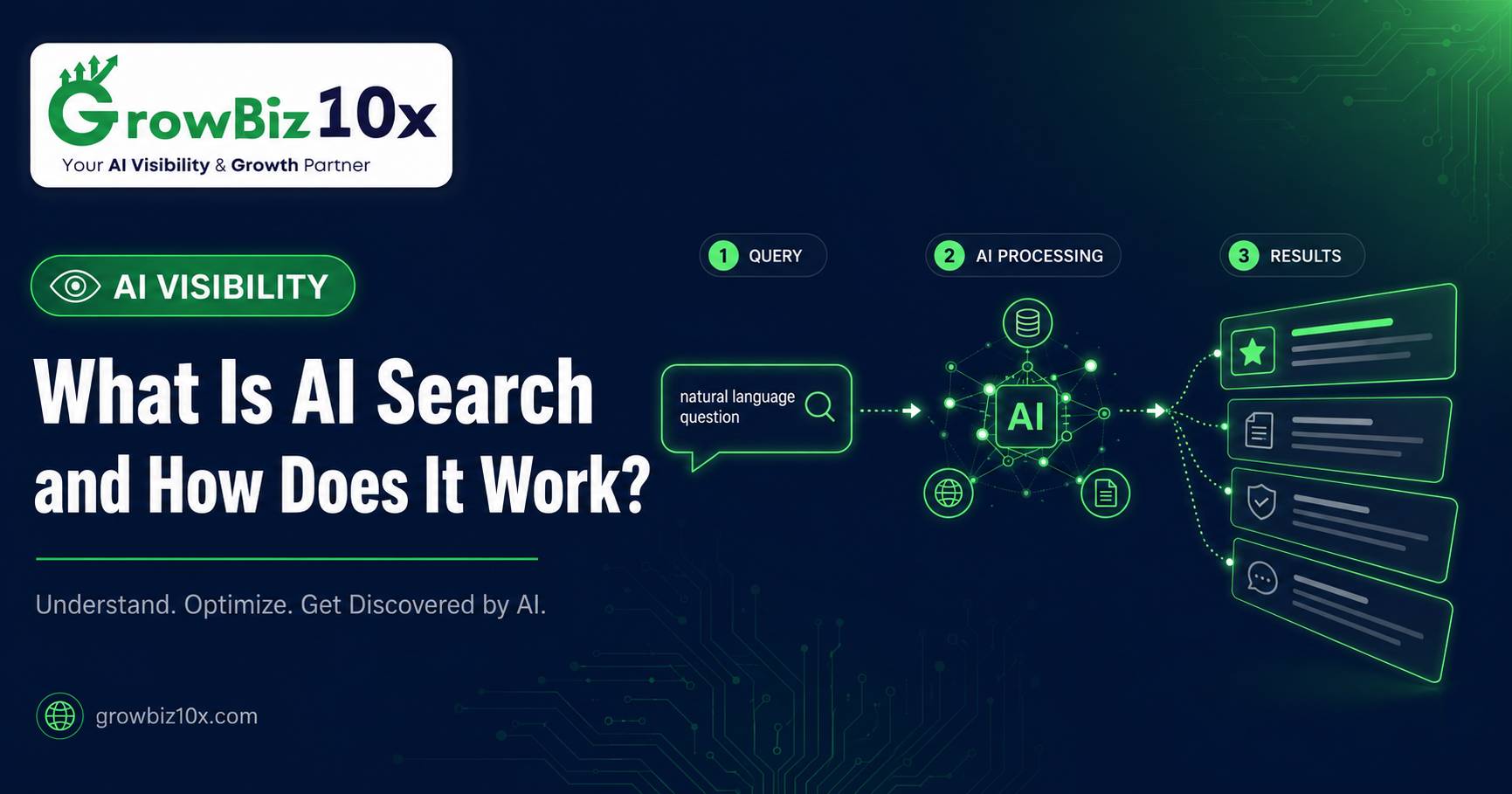
AI search is a way of finding information in which an AI system reads and synthesizes many sources, then delivers a direct, conversational answer instead of a page of links. It works by combining large language models with real-time retrieval, so the engine understands what you mean, gathers relevant material, and writes a response that often names specific businesses. The landscape of online search has fundamentally shifted: rather than typing fragmented keywords, users now converse naturally with AI and expect immediate, synthesized answers.
The Technology Behind AI Search
Modern AI search relies on retrieval augmented generation, usually shortened to RAG. When a query comes in, the system performs a sequence of operations:
- Intent analysis: the language model interprets the nuanced meaning behind the user's question, including context from earlier messages in the conversation.
- Real-time retrieval: the system fetches current, relevant information from web pages, business listings, and other trusted sources.
- Synthesized generation: the AI drafts a coherent, natural-language response that directly answers the query, often citing the sources it used.
This design matters for businesses because AI answers are not pulled from a static memory alone. Engines actively re-read the live web, which gives you an ongoing opportunity to influence what they find and repeat. The balance between what a model remembers and what it looks up in the moment is explained further in Training Data vs Real-Time Retrieval: How AI Finds Business Information.
A Worked Example: One Query, Start to Finish
Suppose someone types: my kitchen sink is leaking and I need someone in Portland who can come today. Intent analysis identifies an emergency plumbing request, a location, and a same-day constraint. Retrieval pulls candidate plumbers from listings, review platforms, and service pages, favoring sources that state service areas and availability plainly. Generation then writes a short answer naming two or three plumbers, noting who advertises emergency service and what reviewers say about response times. A plumber whose website never mentions emergency availability, or whose hours conflict between directories, is unlikely to survive that filtering, no matter how good the actual service is. The whole evaluation takes seconds, and the customer only ever sees the final names.
Traditional Search vs. AI Search
While traditional search functions as an index that points users to potential resources, AI search functions as an assistant that reads those resources and delivers the final answer. In classic search, ten or more results compete on one page and the user does the comparison work. In AI search, the engine does the comparison and typically surfaces only a few names.
This transition requires businesses to optimize their digital presence for direct citation rather than mere click-through rates.
Where You Encounter AI Search Today
- Chat assistants such as ChatGPT, Claude, and Gemini, where users ask for advice and recommendations in plain language.
- AI-enhanced search engines such as Google AI Overviews and Perplexity, which blend generated summaries with source links.
- Embedded copilots inside browsers, phones, and productivity tools that answer questions without a visit to a search engine at all.
What AI Search Means for Your Content
Because AI engines quote and paraphrase, the content most likely to be used is content that is easy to lift: clear definitions, direct answers near the top of the page, well-labeled headings, FAQs, and structured data that spells out who you are and what you do. Vague marketing copy is hard for a model to reuse. Specific, factual, well-organized pages are exactly what an answer engine looks for when it assembles a response. Practical formatting guidance lives in How to Optimize Content for AI Answers.
How to Get Your Business Into AI Answers
Start by making sure the engines can find accurate raw material about you. Keep your business information consistent across your site and major directories, publish pages that each answer one customer question, and build reviews and mentions on independent sources. Then test regularly: ask the major assistants the questions that matter in your category, and note which businesses they name and why. The behavioral side of this shift, and what it changes about how buyers discover you, is covered in How AI Search Is Changing the Way Customers Find Businesses.
Frequently Asked Questions
Does AI search replace Google?
Not exactly. Google itself now includes AI Overviews, so AI search is transforming traditional search rather than simply replacing it. What changes for businesses is the format of the result: fewer ranked links, more synthesized answers, and a higher premium on being the source those answers cite.
Where do AI search engines get their information?
They combine what their models learned during training with live retrieval from web pages, business listings, review platforms, news coverage, and other public sources. That is why consistency matters: engines cross-check multiple sources, and conflicting information lowers their confidence in recommending you.
Can a small business appear in AI answers?
Yes. AI engines reward clarity and trust more than sheer size, especially for local and niche queries. A small business with consistent data, focused content, and genuine reviews can beat larger competitors in AI-generated shortlists for the specific questions it answers best.
Related reading
- What Is AI Visibility? A Complete Guide for Businesses
- How AI Determines Whether a Business Is Relevant
- The Future of AI Visibility and Business Strategy
- How People Are Using ChatGPT Instead of Google to Find Businesses
Turn AI Search Into a Growth Channel
AI search rewards businesses that are easy to understand and easy to trust. The mechanics may be new, but the opportunity is familiar: show up where your customers are asking. GrowBiz10x shows you how AI engines see your business today and what to fix first. Run an AI visibility audit with GrowBiz10x and see exactly how you appear in AI search right now.
Want to see how your business performs across AI platforms?
Get a free AI visibility audit and personalized insights for your brand.
About the Author
GrowBiz10x Team
AEO SpecialistWe share actionable insights on AI visibility, content strategy, and digital growth to help businesses get discovered and grow faster.
Related Posts

Categories
- Commercial / Agency / GrowBiz10x20
- Industry-Specific10
- Measuring AI Visibility10
- Practical AEO/GEO10
- SEO vs AEO vs GEO10
- Brand Signals & Authority10
- How AI Understands & Recommends Businesses10
- The Search Shift10
- Pillar: AI Visibility10
Get the latest insights in your inbox.
Subscribe to our newsletter and never miss an update.