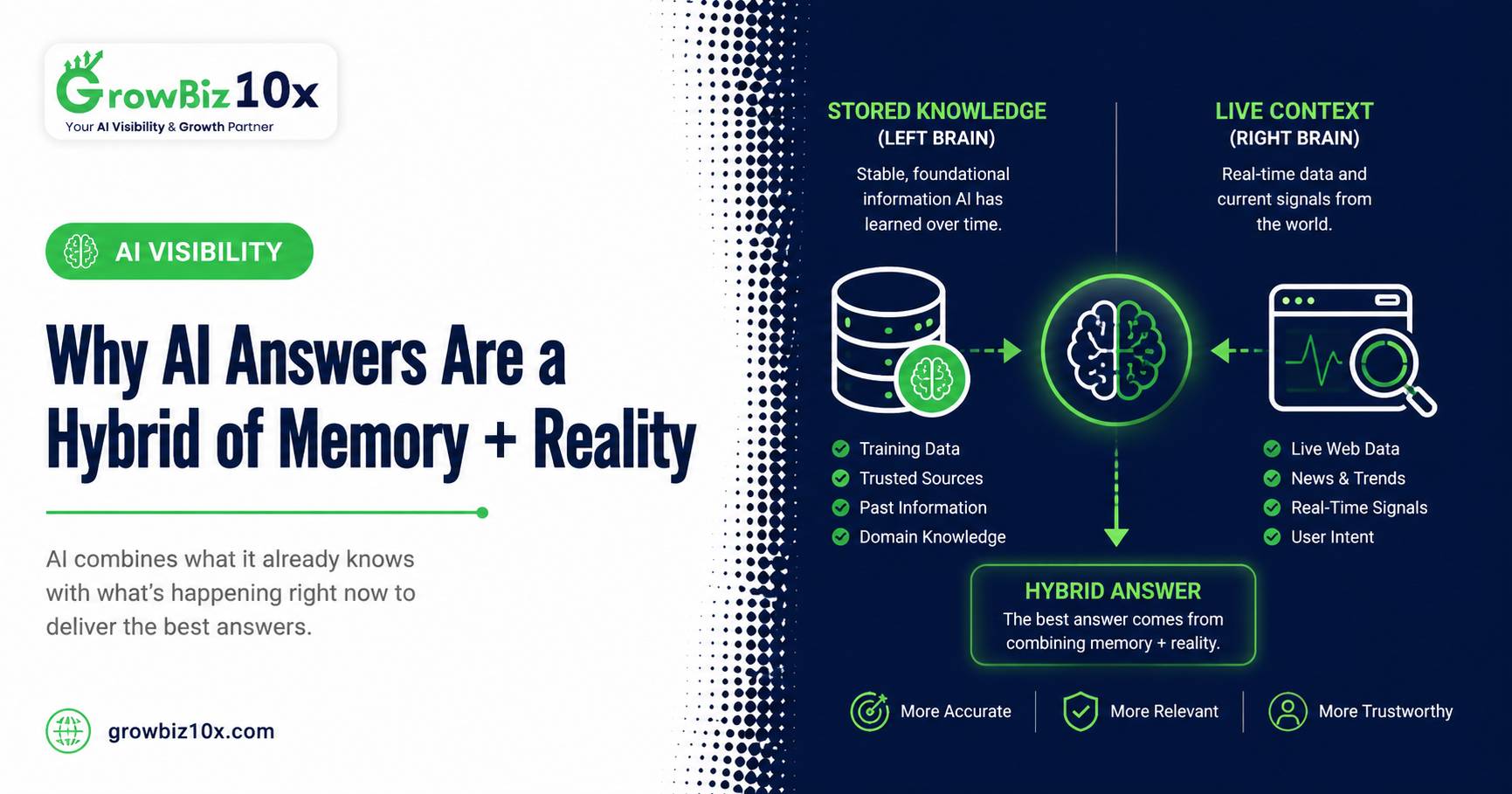
AI engines find business information through two channels: training data, the huge text corpus a model learns from before release, and real-time retrieval, where the engine searches the live web while answering. Training data supplies durable background knowledge about your business; retrieval supplies current facts and citable sources. Most answer engines now blend both in a single response, so effective AI visibility work feeds both channels rather than choosing between them.
What Training Data Contributes
Training data gives a model its baseline understanding: which businesses exist, what categories they belong to, where they operate, and what reputation surrounds them. This knowledge is compressed into the model's parameters during training, so it is fast and always available, but frozen at the training cutoff and fuzzy on specifics. When you ask a model a question without web access and it still names businesses, you are seeing training data at work. Presence here comes from years of accumulated public mentions, not from anything you did this week. The learning process behind this is described in How Large Language Models Learn About Your Business.
How Real-Time Retrieval Works
Retrieval-augmented generation flips the process. The engine takes your question, runs searches against a live index, selects a handful of pages it judges relevant and trustworthy, loads them into the model's context window, and generates an answer grounded in what it just read. The selected pages usually appear as citations. Perplexity and Google AI Overviews work this way by default, and ChatGPT does when browsing is active. Retrieval favors pages that are indexed, fast, clearly structured, and shaped like direct answers. Which pages make that cut depends heavily on what sources AI engines trust.
How Engines Blend the Two
In practice, most recommendation answers are hybrids. The model's trained knowledge frames the category and suggests familiar names, while retrieved pages confirm current details and add businesses the model did not know. If you are strong in training data but absent from retrieved pages, you may be mentioned without citation, or dropped when the engine defers to its sources. If you are strong in retrieval but unknown to the model, you depend entirely on which pages get selected that day. Strength in both is what makes recommendations stable. The citation side of this split is explored in How Citations and Brand Mentions Shape AI Answers.
A Quick Example: One Question, Two Pathways
Try this with your own category. Ask a model without web access to recommend HVAC companies in your city, then ask a retrieval engine such as Perplexity the same question. The offline answer leans on training data: it tends to name long-established companies with years of accumulated mentions, and it may include outdated details because its knowledge stops at the training cutoff. The retrieval answer reads today's web: it often surfaces different names pulled from a current best-of list or directory page, with citations you can click. Now compare where your business stands in each. Absent from the first answer means the models have not learned you yet. Absent from the second means you are missing from the pages being cited. The gap you find tells you which pathway needs work first.
Optimizing for the Training Pathway
- Build a broad public footprint: press mentions, directories, reviews, and community discussion
- Keep descriptions of your business consistent so associations reinforce instead of conflict
- Favor durable, crawlable pages over closed platforms and ephemeral posts
- Be patient: this pathway updates with new model versions, not overnight
Optimizing for the Retrieval Pathway
- Keep your site technically clean, fast, and fully indexable
- Publish answer-shaped pages that address real buyer questions directly
- Earn placement on the lists and comparison pages engines repeatedly cite
- Keep facts current, since retrieval reads today's page, not last year's
Frequently Asked Questions
Which pathway matters more for a small business?
Start with retrieval. It responds within weeks as new pages and reviews appear, and it drives the cited, linked answers buyers see. Training-data presence compounds more slowly and pays off across future model releases. Do retrieval work first, but keep building durable mentions.
How can I tell whether an answer used retrieval?
Look for citations, source links, or wording that references current information. Linked sources indicate retrieval. A confident answer with no sources usually reflects training data, which is also a useful signal about how strongly the model has learned your category.
Does one strategy serve both pathways?
Largely, yes. Consistent entity information, real reviews, earned mentions, and clear public content feed training corpora and win retrieval selection at the same time. The main difference is timescale: retrieval rewards you now, training rewards you in future model versions.
Related reading
- How AI Engines Decide Which Businesses to Recommend
- What Is an Entity and Why Does AI Care About Yours?
- Why AI Recommends Your Competitors Instead of You
- What Is AI Search and How Does It Work?
Feed Both Channels, Win More Answers
Training data decides what AI engines remember about you; retrieval decides what they discover in the moment. Businesses that show up in both get recommended consistently across engines and question types. GrowBiz10x tracks how you perform on each pathway, shows which sources engines cite in your category, and prioritizes the fixes that move answers fastest. Run your free visibility scan at growbiz10x.com and see both sides of your AI presence.
Want to see how your business performs across AI platforms?
Get a free AI visibility audit and personalized insights for your brand.
About the Author
GrowBiz10x Team
AEO SpecialistWe share actionable insights on AI visibility, content strategy, and digital growth to help businesses get discovered and grow faster.
Related Posts

Categories
- Commercial / Agency / GrowBiz10x20
- Industry-Specific10
- Measuring AI Visibility10
- Practical AEO/GEO10
- SEO vs AEO vs GEO10
- Brand Signals & Authority10
- How AI Understands & Recommends Businesses10
- The Search Shift10
- Pillar: AI Visibility10
Get the latest insights in your inbox.
Subscribe to our newsletter and never miss an update.