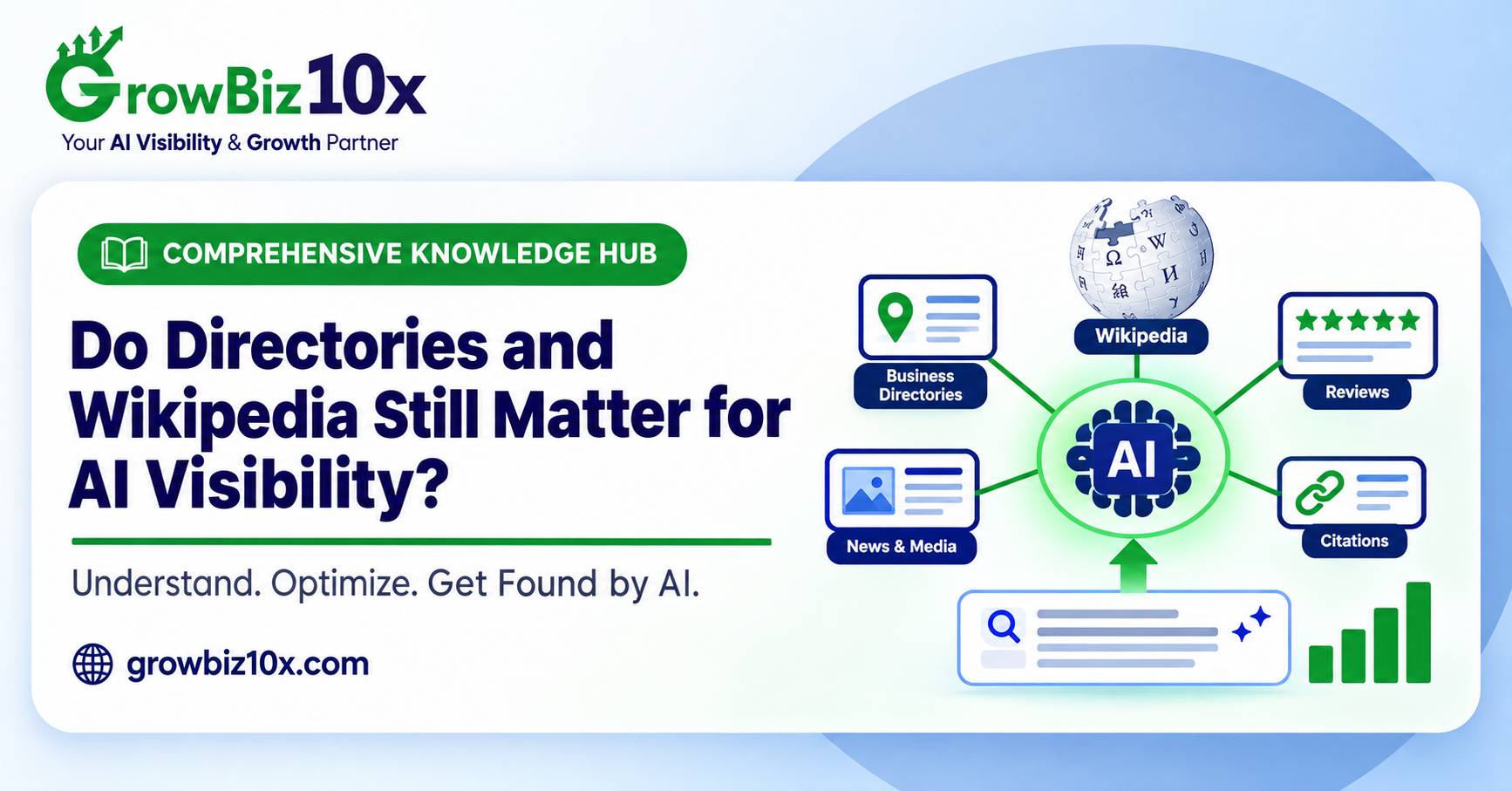
Yes, directories and Wikipedia still matter for AI visibility, but for different reasons than in the old SEO era. Directories have little value for link-building anymore; their value now is structured corroboration, giving AI systems consistent, machine-readable confirmation of who you are, where you operate, and what you do. Wikipedia and its structured sibling Wikidata anchor entity knowledge for nearly every major AI model, which makes a legitimate presence there disproportionately powerful.
Why Structured Listings Feed AI Systems
AI engines and the knowledge graphs behind them build confidence through agreement among sources. Every quality directory listing that states the same name, address, category, and services is another independent confirmation of your facts. Directory category pages also serve a second role: they are exactly the kind of structured, list-shaped pages retrieval engines cite when answering best-in-town questions. A listing can put you in the answer both by confirming your entity and by being the cited source itself. How those graph systems work is covered in How Knowledge Graphs Influence AI Recommendations.
The Directories Worth Your Time
- Google Business Profile: the highest-impact listing for local and service businesses
- Bing Places: feeds Microsoft's ecosystem, including Copilot
- Apple Business Connect: powers Apple Maps and Apple's assistant experiences
- Your industry's dominant vertical directories and review platforms
- Chamber of commerce and professional association listings
- Established local directories with real editorial upkeep
Skip mass submission to hundreds of low-quality directories. Engines discount thin, duplicated listings, and inconsistent data spread widely does active harm. Ten accurate, maintained listings beat two hundred stale ones.
A Quick Example: A Focused Listing Cleanup
Take a med spa that inherited a messy footprint: two hundred auto-generated listings from an old submission service, three name variants, and a previous address still floating around. Instead of buying more submissions, it consolidates. It claims Google Business Profile, Bing Places, and Apple Business Connect, then checks which directories AI engines actually cite for med spa questions in its area, which turns out to be two vertical sites and one local magazine's guide. It corrects or removes the outdated listings, standardizes one name, one address, and one description everywhere, and completes rich profiles on the three cited sources. The engines now read the same facts in every place they look, and the category pages it prioritized are the ones already appearing as citations. Fewer listings, more agreement, better answers.
Wikipedia: High Impact, High Bar
Wikipedia articles are heavily represented in training data and heavily trusted by graphs and engines, so a legitimate article is a major asset. But Wikipedia requires notability, demonstrated through significant coverage in independent sources, and its conflict-of-interest rules discourage writing about your own company. The right sequence is to earn press coverage first, and only then, if notability is genuinely met, pursue an article through proper channels. Astroturfed articles get deleted and damage credibility.
Wikidata: The Quiet Workhorse
Wikidata is the open structured database that feeds many knowledge systems, and its inclusion bar is lower than Wikipedia's: items need verifiable references, not fame. A well-formed Wikidata item stating your official name, type, location, website, and identifiers gives AI systems a clean structured anchor for your entity. Keep every statement referenced and accurate; unreferenced promotional edits get reverted there too. A clean structured anchor also strengthens the entity work described in What Is an Entity and Why Does AI Care About Yours?.
A Practical Playbook
- Claim and fully complete Google Business Profile, Bing Places, and Apple Business Connect
- Identify the three to five vertical directories AI engines cite in your category
- Standardize your name, address, phone, description, and category before submitting anywhere
- Audit existing listings and fix or remove outdated ones
- Build press coverage, and revisit Wikipedia only when independent notability is real
- Create or update a properly referenced Wikidata item
Frequently Asked Questions
Are paid directory submission services worth it?
Rarely, if they promise volume. Bulk submissions create thin, inconsistent listings that engines discount. Data aggregator services that syndicate accurate local data to a defined network can be efficient; judge any service by data quality and control, not by listing count.
Can I write my own Wikipedia page?
Direct self-authoring is discouraged by Wikipedia's conflict-of-interest guidelines and usually ends in deletion. If your business truly meets notability standards, use the articles-for-creation process and disclose your affiliation, or wait for independent editors. Build the press record first.
Do niche directories beat big general ones?
Often, yes. Engines answering category questions cite category-specific sources, so the leading directory in your vertical may influence AI answers more than a giant general site. Watch the citations in AI answers for your niche and prioritize accordingly.
Related reading
- How AI Engines Decide Which Businesses to Recommend
- What Sources Do AI Engines Trust When Recommending Businesses?
- How Citations and Brand Mentions Shape AI Answers
- How Consistent Business Information Improves AI Visibility
Modern Listings for Modern Engines
Directories and Wikipedia did not stop mattering; the reason they matter changed. Treat listings as entity infrastructure and reference sites as trust anchors, and invest in quality over quantity. GrowBiz10x audits your listing footprint, spots the inconsistencies confusing AI engines, and tells you which directories actually influence answers in your market. Get your listings graded at growbiz10x.com.
Want to see how your business performs across AI platforms?
Get a free AI visibility audit and personalized insights for your brand.
About the Author
GrowBiz10x Team
AEO SpecialistWe share actionable insights on AI visibility, content strategy, and digital growth to help businesses get discovered and grow faster.
Related Posts

Categories
- Commercial / Agency / GrowBiz10x20
- Industry-Specific10
- Measuring AI Visibility10
- Practical AEO/GEO10
- SEO vs AEO vs GEO10
- Brand Signals & Authority10
- How AI Understands & Recommends Businesses10
- The Search Shift10
- Pillar: AI Visibility10
Get the latest insights in your inbox.
Subscribe to our newsletter and never miss an update.